The question of how earthly concepts like sex/gender apply to acausal beings seems of general interest to many. I’ve also encountered recurrent push-back against my perception of the gender of a specific entity I’ve often worked with. This blog post therefore unpacks some thoughts of mine re: sex/gender – both in general, and with specific reference to Nythra, one of the Dark Gods (Nekalah) of the Order of Nine Angles (ONA/O9A).
Introduction: defining “sex” and “gender”
For the purposes of this discussion, I’ll define sex and gender thus:
Sex refers to the role an individual plays in the reproductive process. In many species (not all), this entails two main possibilities. The female is the one with higher-investment gametes – i.e., small number of egg cells + more reproductive events inside the body. The male is the one with lower-investment gametes – i.e., large number of sperm cells + more reproductive events outside of own body.
Gender refers to an identity based in social expectations and aesthetics rooted – whether directly or circuitously – in sex. Male and female have different reproductive strategies, therefore masculine and feminine will be shaped by different evolutionary pressures. The masculine strategy tends to favor competition, risk-taking, and violent conquest. The feminine strategy tends to favor cooperation, nurturing, and social maneuvering. These tendencies can manifest very differently between different species and cultures. Nonetheless, I believe “masculine” defines something meaningful that systematically differs from “feminine”, typically along lines such as those just described.
I should pause here to note: i) yes, I’m aware individuals exist who fall between or complicate these categories; ii) my merely articulating what I just articulated is not meant to suggest there is anything “wrong” with those individuals. To say more will go down rabbit-holes that are not the intended focus of this post.
I bring this up, rather, to explain why the rest of this post talks only about gender and not sex:
I’m not under the impression that acausal beings reproduce as we do. It follows that technically, none of them have a “sex”. Most serious magicians I’ve spoken to about such matters have no problem concluding this.
But the question, then, is why do we nonetheless perceive entities as having a “gender”?
In what sense do entities have a “gender”?
It’s an unavoidable aspect of society that humans are navigating gender all the time. Some of this has a biological basis – e.g., masculine risk-taking manifests in men outnumbering women in prison. Others stem from arbitrary social conventions – e.g., people in one era seeing a particular fashion as “masculine” and those in a later seeing it as “feminine”. Still others stem from personal experience – e.g., an abusive mother’s child may conceive “femininity” differently from that of a loving mother’s.
I would think that if you combine what I just said in the previous paragraph with the above point re: acausal beings not having a “sex,” then our perceptions of an entity’s “gender” will depend on such factors as:
- How masculine and feminine behavior/appearance/etc. are defined within our culture and/or other sub-groups we individually belong to (e.g. family)
- What we personally believe and perceive about gender, re: our own identity, our sexual orientation, our experiences, etc.
- How the entity wishes us to understand it – e.g., of the metaphors available in our minds for it to use, which best suit its purpose?
It strikes me as obviously following that people with different upbringings and life experiences can perceive an entity differently. A demonolator might, for example, say “[entity], described as masculine in medieval grimoires, nonetheless seems feminine to me.” And why not, insofar as society’s understanding of “feminine” has likely broadened in the meantime?
Note though, that I am not thus saying “the masculine entity turned feminine”. I’m also not saying, “the masculine entity was truly feminine all along”. In fact, I would defend the older conception of the entity against people making such claims.
My point, rather, is that both conceptions can reveal truths about the entity; therefore, both are worth considering.
The Nythra issue
Let’s now turn the discussion to an entity that I’ve seen some heated gender discussions surrounding: Nythra.
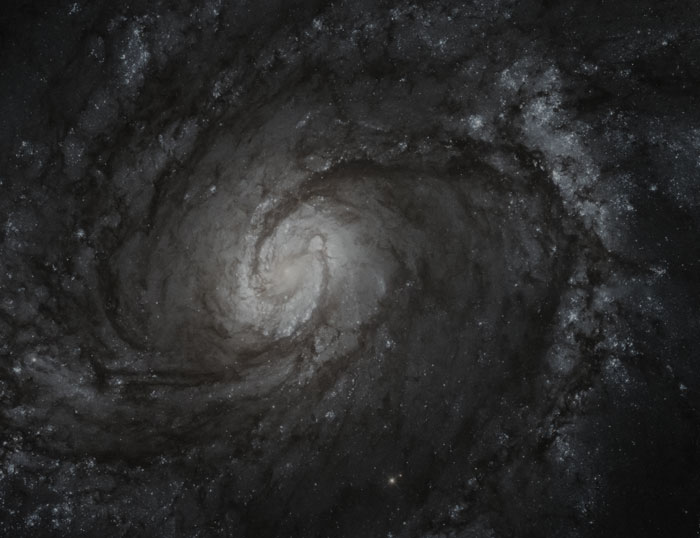
The point at issue is that some people seem to feel very strongly that this entity “must” be feminine. They call it “Void Mother” and take exception to my having described it as masculine. I have, moreover, seen said concerns tied to accusations that I am “trying to make O9A into something it’s not” – a bit of an odd claim insofar as I think I’ve always been clear that I am speaking for myself and not “for O9A”.
This post will accordingly deal with the following issues:
- How is Nythra perceived by a majority of Niners?
- Why is my experience different?
- What common factors suggest that it should be possible to “agree to disagree” on this issue?
I am aware that gender can be an emotional topic for some people, and I empathize with why. However, I find the continued clashes over Nythra’s gender to be frustratingly repetitive, and ultimately unimportant in light of broad agreement regarding other aspects of the entity. I’m therefore writing this blog to minimize tiresome retreading of the same ground over and over.
Nythra in the orthodox O9A understanding
The majority for “feminine”
Say I was teaching a class in an academic setting in which someone was asking me about Nythra. What would I say if a student was to ask me about the entity’s gender?
In such a situation, I would report that many Niners do perceive the entity as feminine. Nonetheless, one can find textual support to go both ways.
You can find plenty of sources where Nythra is framed as clearly feminine. Here’s one, and another one, and another one.
Consider too that Caelethi’s passage about Nythra features lots of imagery that’s feminine in Freud’s sense: canal, vortex, chalice, chamber. Put more crudely: it’s a big hole in existence – duh, it’s female!
I’ve no issue with recognizing that this is a majority position. I recognize all sources I just listed as saying valid things about the entity. The mere fact that I’ve had experiences where Nythra seemed masculine has never meant disrespect for any of these sources. To the contrary: gender aside, the vast majority of what they describe agrees with what I too have experienced!
The minority for “masculine”
At the same time, though, there are a couple contraries that seem worth noting for comprehensiveness’ sake:
- In Naos‘ compact summary of the Nekalah, several entities are explicitly identified as feminine: Aosoth, Azanigin, Davcina, Budsturga, and Darkat. But said section doesn’t say one way or the other about Nythra. One also can’t argue anything decisive based on what names look like here. “Kthunae” has a feminine ending in Latin, yet it’s “Lord of the Earth”. And a consideration of ancient Hindu gods such as Indra, Varuna, etc. makes evident that “-a means feminine” (e.g., Shugara) is by no means a universal cultural rule. It thus seems this foundational O9A text does not rule decisively on Nythra’s gender – at least not in the place where many go looking for ready info about the Nekalah.
- In The Dark Gods in the Spheres and Pathworkings, Magister Hagur writes “Let us be friends with Nythra, the beauty of whose manly limbs make us tremble with pleasure, and let us caress him as it were through our ritual dances.” I’m aware that Hagur isn’t universally respected in the Niner scene. I’m also under the impression he’s not consistent about Nythra’s gender across all his works (e.g., quote in the second of the three sources I linked in the previous section has “she”). Nonetheless, this passage still strikes me as noteworthy re: someone whose gnosis others have taken seriously is making this assertion.
Now, of course one can argue that these are minority points and hence the majority should rule.
I would reply, though: is it not interesting that we have not seen claims that, say, Azanigin or Shugara are sometimes male – nor that, say, Atazoth or Shaitan are sometimes female?
Might one then speculate that dissent on this topic itself suggests interesting complexities re: the entity? It seems to me the entities are better served by exploring such complexities than suppressing them.
My experience of Nythra
Initial exposure to Nythra
My exposure to Nythra proceeded via the following stages:
- Hearing of the entity in minimal detail via reading Naos and Caelethi (linked above). At that very initial stage, I was no more struck by Nythra than by the other entities – at least consciously.
- Direct contact post-initiation. My first impression was “there’s something here – who are you?” The response was “energy vortex in the Abyss.” Cue immediate personal crisis re: “this thing is more real than anything I have ever seen in the ritual chamber before and it belongs to a tradition that I should in theory be incompatible with.”
- Did some research and encountered V. K. Jehannum’s take on Nythra (and through that, Hagur’s). Everything seemed to line up except for the gender – for instance, the personality Jehannum describes is very much what I encountered.
- Several years of personal experimentation, before, during, and after writing Nine Keys of Abyssal Darkness. It seems worth pointing out that I did, during this period, have several glimpses of Nythra in a feminine form. Typically this was in connection with themes of poisoning in general and datura specifically. Some manifestations were also relatively genderless, e.g. seeing the vortex directly. Thus, the “vaguely-masculine hooded wraith” form, though predominant for me personally, is not the only form I’ve seen.
Once I published my book, I increasingly met more people who’d encountered Nythra who I could compare experiences with. The initial sample was predominantly people who’d experimented with the Nekalah but weren’t Niners. Only over time – especially within the last year – have the numbers of Niners and non-Niners been evening out.
This has led to some interesting observations, which I’ll expand on in the next section.
The initial sample of “non-Niner Nythra contact” contained:
- Women perceiving Nythra as masculine but androgynous, like how male vampires are often a bit androgynous.
- Women perceiving Nythra as distinctly masculine, but monstrous (e.g., shadow creature assaulting them).
- Men perceiving Nythra as distinctly feminine, but monstrous (e.g., grotesque hybrid creature assaulting them).
- Men and women perceiving Nythra as either a “vortex/tear/rip in reality” or alien-insectine being, neither having a distinct gender.
- People with trans or non-binary partners perceiving Nythra as having similar gender complexities.
- Gay men perceiving Nythra as male, and bisexual men perceiving Nythra as sometimes male and sometimes female.
Based on that sample, I formed a theory that perhaps Nythra’s gender was dependent on what the beholder was attracted to. I think you can see how that might seem like a reasonable surmise given the sample. “Death has something for everybody,” one might say.
However, as I’ve met more Niners, the female-perception majority has become stronger. In particular, I’ve encountered multiple male-attracted Niner women who don’t perceive Nythra as male at all.
I’ve therefore since altered my theory from what Nine Keys of Abyssal Darkness had claimed. I now lean toward “if sexuality plays a significant role in one’s perception and interaction with Nythra, then its form may reflect the beholder’s desire; but, if that’s not a significant factor in how the beholder interacts with Nythra, probably it will appear feminine.”
The “Void Mother” archetype seems salient in the latter case. Vs. if someone (e.g. me!) has enduring issues with motherhood-related expectations placed on women, yet is attracted to other key themes associated with Nythra (see below), it hardly seems surprising for the entity to present itself under a different metaphor when interacting with such a person.
Common factors between O9A’s Nythra and mine
Considering above observations about Nythra plus other sources, I feel it’s valid to highlight the following traits regardless of gender:
- Predatory and dangerous
- Vampirism, poison, and other sinister forms of consumption
- Strong aura of terror
- Death deity
- Compelling presence via dark charisma
It seems to me that all valid gnosis of Nythra involves these elements. They’re consistent regardless of perceiving the entity as masculine or feminine. It follows: there is a non-arbitrary standard re: “what Nythra is.” An entity lacking these traits would not be Nythra.
At the same time, notice that both the male and female manifestations share these traits. Why is there nonetheless variety in gender perception? I suspect it’s because different people will answer the following sorts of questions differently:
- To what extent do you think of yourself as prey (and hence the entity as “other” from you) vs. as a fellow predator (and hence the entity as “same” as you)?
- Which fills you with a stronger sense of primal fascination: being consumed/engulfed, or being violently penetrated?
- To what extent would you say that you are afraid of other people? Do the specific scenarios you fear tend to involve men or women?
- How plausible or implausible do you find it to envision death as a lover? Relatedly, are you attracted to men or women?
- Is there a specific way that you envision charisma being manifest in men vs. differently in women? Does one of those match your experience of the entity’s behavior more than the other? And is this a kind of charisma that you find attractive in a potential partner?
The relative importance of these questions may also vary – e.g., perhaps they are only relevant if Nythra’s predatory charisma and the individual beholder’s personal complex of sex-and-death interact in a specific way.
How this parses my experience vs. others’ experiences of Nythra
Let’s see what happens when I answer these questions:
- As I detailed recently, my sheltered upbringing made me think of myself as fragile to a greater extent than is surely normal for a typical Niner. I’m finding my mindset evolving toward a more predatory direction with time. But it’s a long journey.
- I’m a mostly-masculine-attracted woman with sub/masochist tendencies and interest in various “dark” fantasies.
- Both my sheltered upbringing (see link in 1) and the unhealthy manifestations of feminism I’ve crossed paths with caused me to be more afraid of men than women. Less so now, as walking an O9A-adjacent path has balanced me in a way that’s neutralized past neurotic excesses regarding this issue. Nonetheless, said issue remains entangled with 1 & 2 on a primal level.
- Stereotypical goth girl here. Hilariously, my Dad actually had wanted to name me Persephone!
- Before my Nythra contact, I had several partners who I was drawn to via a similar dark-yet-witty vibe. Since that contact though, I have largely ceased to be attracted to that vibe in humans. Because why settle for poor copies when you can have access to the original now? 😉
Ask yourself, then: if someone’s life experiences are as I’ve described, does it not make a sort of sense that such a person would perceive this entity as masculine?
And would it not make an equal amount of sense for someone with different life experiences and gender perceptions to perceive it differently?
I don’t then see why it has to be “a problem” to view the entity differently than is “normal.” Nothing about my experience cancels or invalidates anyone else’s. And my experience, though different, does still reflect core themes associated with the entity within O9A’s tradition.
Concluding thoughts
Hopefully the preceding discussion makes the following clear:
- If you understand sex and gender as I do, it follows a) acausal entities don’t have a “sex” and b) their “gender” is just a metaphorical construction shaping our interaction with them, not an absolute truth. If you believe in “divine feminine” and “divine masculine”, that entities “are” one or the other, and I’m therefore wrong, you are free to hold that opinion. But I in turn can opine that you’re projecting causal categories onto the acausal in a way I wouldn’t. And I see no benefit in arguing across such a large worldview-divide if someone takes issue with me on this.
- I’m aware that the majority of O9A views Nythra as feminine. It’s never been my intent to misrepresent O9A in this regard. As said elsewhere too, I’ve never styled myself as “reforming” O9A or correcting “what O9A should actually be”. That’s why I have a separate label for what I do: Tenebrous Satanism! If someone asks me what O9A thinks of Nythra, I’d say “O9A largely views it as feminine”. I am thus not some kind of propagator of misinformation about “O9A’s real take on Nythra”.
- Nonetheless, I personally experience Nythra predominantly as masculine. Doubtlessly, this is because I have different ideas about masculinity, femininity, sex, death, etc., than typical Niners. I think that makes sense – and that it also makes sense when others with different views see the entity differently. Never have I had any problem with anyone for perceiving the entity as female! And if someone was to ask me what Tenebrous Satanism believes about Nythra, I would say “it’s complicated” – not “it’s masculine”!
I think that’s all I have to say on this topic. Questions/clarifications/etc.? Let me know in the comments.